Dragon Dreaming

Dragon Dreaming

Anne Norman: Shakuhachi
Anja Tait: violin
David Matthews: field recording

Duration: 6:03

Artist’s notes:

On the northeast tip of Arnhem Land, where Macassans and Yolngu once traded, David recorded ocean swells surging in and out of air-filled caverns, pushing air through tiny nostrils in the bauxite. He called it “Breathing Planet” When amplified within the long tunnel, it sounds like a hung dragon asleep in its lair. Joining the dragon, Anne plays a traditional Zen meditation, Tamuke (Offering), accompanied by Anja’s violin. We respectfully acknowledge the Yolngu people for allowing David to explore that stretch of coast. This is our humble Offering in return.

Recorded underground in the 172-meter-long Tunnel Number Five under Darwin (Australia), and released in the CD Beneath the Surface (2016)

All sounds and texts text © 2016 by Anne Norman, Anja Tait, David Matthews

MusicSafari 6: Beneath the Surface (CD Review)

Beneath the Surface (CD Review)
beneathsurface


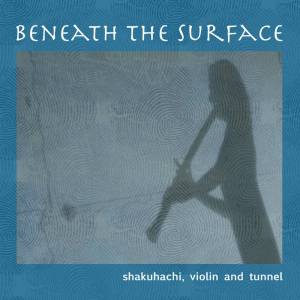
Beneath the Surface is Anne Norman’s recently released site-specific album of traditional works, new compositions and improvisations for solo shakuhachi and shakuhachi with violin(s). The CD features performances of Anne Norman (shakuhachi ), Emily Sheppard (violin) and Anja Tait (violin). As the name of the album indicates, all the music and spoken poetry on this album was recorded underground in the 172-meter-long Tunnel Number Five under Darwin (Australia). In this project, the tunnel, which was originally constructed in response to attacks by Japanese bombers during WW II, has become an underground concert venue and recording space. The fabulous acoustic of the site contributes a significant part to the projection and reflection of sound waves and in the way musical streams and layers are woven together to create the ultimate audio experience for listeners. Australian composer-performer Anne Norman, who spent many years studying shakuhachi in Japan, has brought a spirit of reconciliation to the tunnel to transform its original purpose and bring the little flute (the shakuhachi) and the giant flute (the tunnel) together to start a meaningful and daring adventure in sounds.

The music and poetry in the album flows effortlessly from the first to the last track to create a mesmerising journey which is rich in colours, pace and emotion. Anne Norman demonstrates her mastery of the shakuhachi as well as her in-depth understanding of the spirit of Japanese contemplative music in Sarus Cranes which opens the CD. Her exquisite rendering of traditional Japanese Zen music is heard again in Dragon Dreaming in which the traditional melody Tamuke is presented as an offering to the amazing sounds of ocean swells supported by a very sensitive violin accompaniment by Anja Tait.

Moving from the traditional sounds of Japan, the shakuhachi embarks on a journey across various horizons and boundaries. Original compositions for solo shakuhachi and improvisations with violin(s) provide a colourful feast of sounds.
The two original compositions for shakuhachi, Rain Now and Then and Whispered Shadows, are beautiful works. Rain Now and Then is a stream of delicate melodies born of a masterful control of breath. In Whispered Shadows, soft multi-phonic elements of the shakuhachi and voice come and go behind or in-between walking rhythms of recurring patterns, creating a surreal impression.

The improvisations, especially the live recordings on tracks 4, (Bouncing back), 10 (Have they gone yet?) and 17 (Beneath the Surface), reveal the exceptional power of collective and spontaneous creativity. Listeners are led through various landscapes of sounds and emotions by the magical sounds of the shakuhachi at play with the violin(s) through space. The last track, Beneath the Surface, is so rich in audio images that it sounds almost like an artistic cinematic soundtrack condensed into a timeline of less than 7 minutes.

The poems, written and recited by Anne Norman, add another dimension to the whole program. They generate atmospheres, add depth to the meaning of the music and lead listeners to the next aural world about to unfold.

This CD should be listened to as a whole (and on headphones) to experience the flow of music and emotions in a space that has been transformed into a higher purpose.


Listen to the whole CD at: Anne Norman’s Bandcamp Site

For the history of the Darwin World War II Tunnels: Darwin WW II Tunnels
MusicSafari 5: Bernie Krause’s Great Animal Orchestra

The Great Animal Orchestra

The Foundation Cartier pour l’art contemporain has created a virtual presentation to celebrate Bernie Krause‘s 50 years of nature recordings.

From July 2, 2016 to January 8, 2017, the Fondation Cartier pour l’art contemporain presents The Great Animal Orchestra, inspired by the work of American musician and bioacoustician Bernie Krause. The exhibition, which brings together artists from all over the world, invites its audience to immerse themselves in an aesthetic meditation, both aural and visual, on an animal kingdom that is increasingly under threat.

As an extension of the exhibition at the Fondation Cartier, the online presentation of The Great Animal Orchestra provides visitors the opportunity to conduct nature’s vast musical ensemble. Guided by the voices of Bernie Krause in English, singer Camille in French and musician Orlando Morais in Brazilian, the site, developed by the Fondation Cartier pour l’art contemporain, unveils the mysteries of the acoustic harmony of the animal kingdom, offering an unprecedented interactive experience that reveals the ecology of the soundscape and the forces behind it.

The Great Animal Orchestra

For more information on Bernie Krause’s works and his Wild Sanctuary Audio Archive, please visit:
Wild Sanctuary

“The Wild Sanctuary Audio Archive represents a vast and important collection of whole-habitat field recordings and precise metadata dating from the late 1960s. This unique bioacoustic resource contains marine and terrestrial soundscapes representing the voices of living organisms from larvae to large mammals and the numerous tropical, temperate and Arctic biomes from which they come. The catalog currently contains over 4,500 hours of wild soundscapes and in excess of 15,000 identified life forms.

Fully half of the natural soundscapes in this rare set are from habitats that no longer exist, are radically altered because of human endeavor, or have gone altogether silent”-wildsanctuary.com

MusicSafari 4: Sound Testament of Mount Athos by Arsenije Jovanovic

Sound Testament of Mount Athos

by Arsenije Jovanovic

A rare soundscape from Mount Athos by Arsenije Jovanovic presented at Ear to the Earth:

“Mount Athos, or Sacred Mountain, or Áyion Óros, on the Khalkidhiki peninsula that extends towards the southeast from the northern coast of the Aegean Sea, is the only independent monastic state in the world. There are currently twenty Byzantine monasteries on Mount Athos — seventeen Greek, one Russian, one Bulgarian, and one Serbian — together housing about two thousand orthodox monks living in hundreds of cells. Many of these monasteries, built on high and inaccessible rocks, look like huge eagles’ nests. Since the ninth century when the sacred community began to allow no woman to set foot on Mount Athos, the population has been only men, only monks and occasional pilgrims. No one was born there, millions of men died there.”

Read more about and listen to the work at EartotheEarth.org

The Sea that Connects

The Sea that Connects ご縁

For fipple flute, bell, didgeridoo, chant, beatbox by Breath Trio

Some view the sea as that which separates, but for centuries ocean wind and currents have borne many to meet on distant shores.


海に隔てられた世界
潮と風は何世紀にも渡り
遥か遠くまで人々の出会いを届けた


Breath Trio are Anne Norman (shakuhachi), Sanshi (didgeridoo), Reo Matsumoto (beatbox (voice percussion)). Breath plays music rooted in the moment: Intuitive music-making that builds evocative soundscapes and then bursts into rhythms that makes you want to get up and dance. Combining the haunting and meditative sounds of shakuhachi with the mesmeric and pulsing drone of the didj and the playful soundscapes of Reo’s mouth and breath.

These three players bring an incredible combination of talent, sounds and colours:

Anne conjures melodies that sing through the shakuhachi, inspired by the time and place, and the sounds offered by her musical partners;

Sanshi plays didjeridoo with a power and creative flare that combines rhythms of Arnhem land with street tribal;

Reo simply astounds with what he is able to create with his mouth. There is a synthesizer and drum-kit hiding in there somewhere!

The Sea that Connects was released on the CD Ocean Breath in 2013.

For more information about Breath and their music, visit: Breath Trio’s Homepage

Music and text copyright © 2013 by Breath Trio


Ocean Breath

Ocean Breath オーシャンブレス
For Shakuhachi, Didgeridoo and Beatbox by Breath Trio

Vast white dune
Wide blue sky
Shifting sands
Ocean breath


広大な
白い砂丘と
広く青い空
青い空
砂なびかせる
大洋の息吹


Breath Trio are Anne Norman (shakuhachi), Sanshi (didgeridoo), Reo Matsumoto (beatbox (voice percussion)). Breath plays music rooted in the moment: Intuitive music-making that builds evocative soundscapes and then bursts into rhythms that makes you want to get up and dance. Combining the haunting and meditative sounds of shakuhachi with the mesmeric and pulsing drone of the didj and the playful soundscapes of Reo’s mouth and breath.

These three players bring an incredible combination of talent, sounds and colours:

Anne conjures melodies that sing through the shakuhachi, inspired by the time and place, and the sounds offered by her musical partners;

Sanshi plays didjeridoo with a power and creative flare that combines rhythms of Arnhem land with street tribal;

Reo simply astounds with what he is able to create with his mouth. There is a synthesizer and drum-kit hiding in there somewhere!

Ocean Breath is the title piece of their CD released in 2013.

For more information about Breath and their music, visit: Breath Trio’s Homepage

Music and text copyright © 2013 by Breath Trio


MusicSafari 3: Ocean breath (CD Review)

Ocean Breath

by the Breath Trio (Anne Norman, shakuhachi ; Sanshi, didgeridoo ; and Reo Matsumoto, beatbox)

ocean breath


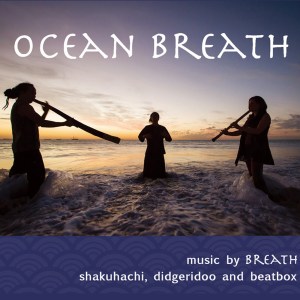
Ocean Breath, released in 2013, features original works for a unique ensemble combining shakuhachi, didgeridoo and beatbox (voice percussion). The remarkable feature of this ensemble is that the shakuhachi is played by an Australian (Anne Norman) while the didgeridoo is play by a Japanese (Sanshi), and they both demonstrate the highest level of mastery of their instruments on the tracks of this CD. Both Anne and Sanshi have successfully taken the shakuhachi and the didgeridoo beyond their traditions to enter a new musical space that corresponds well with the contemporary world.

At times the shakuhachi produces haunting and meditative melodies that remind listeners of the Japanese tradition. At other times, it evokes extremely lively and rhythmic atmosphere that make listeners feel to dance along. The didgeridoo part is also remarkable. At times, it has the stable, lingering and timeless characteristics of Australian Aboriginal music, but at other times, it is intensively dynamic to drive the rhythm of the music. I particularly like the way Sanshi creates the drones on long notes which gradually change the intensity and shape to evoke the atmosphere of the music. When the long flows of the shakuhachi and/or the didgeridoo are combined with the amazing rich palette of beatbox sounds and noises, a set of works that are highly captivating are born.

While all the tracks are worth of repeated listening, I particularly love Tidal Drift, The Sea that Connects (with Anne playing the fipple flute instead of the shakuhachi) and Ocean Breath for their exquisite structural flow and balanced texture. I also like the atmosphere evoked in Through the Mist (a duet of shakuhachi and didgeridoo). I was deeply moved by The Tears of Pearl (for Shakuhachi and bell). The last piece, Bodhisattva Blessing, is a very beautiful composition featuring deep throat voice and harmonic voice, shakuhachi and bell.

You can listen to the whole CD online at: Anne Norman’s Bandcamp site

For more information about the Breath trio, visit their website: Breath Trio

MusicSafari 2: The Sun Palace by Philip Blackburn

The Sun Palace
The Sun Palace is a captivating experimental music-film about tuberculosis in the pre-antibiotics era by composer, environmental sound-artist, and filmmaker Philip Blackburn.

“Another time. Another plague.

The Sun Palace (62 mins running time, HD video) is an epic visual and musical homage to the era, not too long ago, when tuberculosis consumed the nation. 80% of the populace had been infected and were one bloody cough away from a desperate prognosis. X-Rays were brand new. Antibiotics were four decades in the future.

While inspired by many actual stories, anecdotes, details, and events, The Sun Palace is not a documentary or a single narrative so much as a dreamlike, hallucinatory, sensory environment in which we can imagine ourselves lost in medical history. Just as the original patients may have felt. Part experimental documentary, part music video on steroids, and part multi-sensory, multi-narrative pile-up. Every element is derived from actual events and details. It is mysterious, occasionally disturbing while offering an appreciation for the kindness of nurses, the barbaric ingenuity of doctors, and the fervent desire for life of the lungers and wheezers…” (http://thesunpalace.org/)

The Sun Palace by Philip Blackburn:

For more information about Philip Blackburn and his works: Philip Blackburn’s Homepage


MusicSafari 1: Peter Vogel and the Sound of Shadows

Peter Vogel and the Sound of Shadows

Peter Vogel (born 1937) is a German artist who creates interactive electronic sculptures, including soundwall, shadow orchestra, and interactive objects. He has manually created beautiful sculptures made of electronic circuits of photocells, transistors and capacitors which response to sound, light or movements in musical ways.

The sound objects of Peter Vogel blur the boundaries between fine art and performance traditions. His works question established relationships between sculpture and sound, seeing and hearing, the static and the live, as well as challenging the place of sound within the historiography of gallery spaces.

They combine the open form sensibilities of interactive multimedia with an almost classical visual aesthetic that emphasises clean lines, balanced forms and delicate structures. The exhibition celebrates the work of Vogel as influential, and pioneering the emergence of contemporary sound art practices“– Jean Martin.

Peter Vogel’s soundwall, shadow orchestra, and interactive objects can be viewed at:

Vogel Exhibition

“Peter Vogel – The Sound of Shadows”, a Pre-published part of the video documentary about Peter Vogel explaining his work in his atelier in Freiburg i.B., South-West Germany, by Jean Martin and Conall Glees:

https://vimeo.com/59829961

Perfect Harmony for David Dunn

Perfect Harmony for David Dunn
by Warren Burt

Duration: 15 minutes 34 seconds

Composer’s notes:

Last November 2014, for Soundbytes Magazine, I wrote a review of Bazille, a new software synthesizer from u-he productions in Berlin.

Soundbytes Magazine

Playing with this synthesizer, I noticed the many different ways you could control pitch on the machine.  All sorts of just-intonation and other microtonal things were not only possible, but easy.  And you could also combine different ways of controlling pitch for even more complex results. So I began to work on a piece that used some of the pitch possibilities of the synthesizer.  As I worked on it, I began to explore some of the upper reaches of the harmonic series, and was pleased with what I heard. I remember Harry Partch once said that “Just-Intonation dissonance is a whole other serving of tapioca.”  As dissonant as some of these sounds are, they do, from a just intonation point of view, constitute a “perfect” harmony.  Over the course of the piece, the harmonic world changes so at the end it is much more consonant than at the beginning. So there is a kind of harmonic tension and resolution in the piece, albeit a very extended one.  The piece was written for my friend David Dunn, a fellow explorer of extended realms of tuning for many years, as well as his own work in musical interactions with environmental phenomena.

Texts and sounds © 2015 by Warren Burt